When Getting a Reading on Dipstick You Push It All the Way Back in
Dipstick oil analysis may sound a picayune goofy, merely it works. Not to mention information technology'south also inexpensive and quick. There's only one problem - figuring out what the oil on the dipstick really means. No worry. Sit tight for 5 easy lessons on reading your oil dipstick.
Lesson No. i - Retrieving the Dipstick
-
With the engine hot, park on level ground and close off the engine. Look a couple minutes for the oil to render to the oil pan.
-
Open the hood and find the dipstick on the engine - a metal loop or grip sticking out of the end of a metal stalk. If you tin't find it, your owner'due south manual should help.
-
With a rag or thick newspaper towel in i hand, pull on the metal loop or grip and remove the dipstick with the other. Wipe the oil-moisture straight terminate of the dipstick and push information technology dorsum into the stem you pulled information technology out of.
-
Wait a few seconds and pull out the dipstick again.
Lesson No. 2 - Detecting a Low Oil Level
-
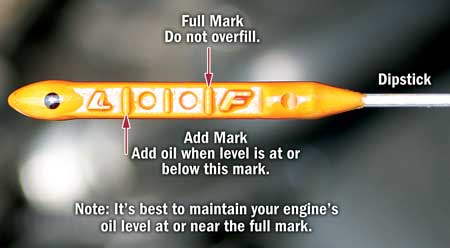
How much oil should be on the dipstick? Examine the end of the dipstick and detect where the oil ends. At that place are markings that indicate the level the oil should reach. Sometimes there are holes instead of marks.
-
If the oil doesn't reach within the markings or holes on the dipstick, you need to add at least one quart of oil. If the dipstick is non showing an oil level, you demand to add together oil immediately. The amount of brand-up oil yous would expect to add volition vary depending on the age of your car, type of engine, total mileage and driving conditions. The dipstick is your approximate for abnormally high oil consumption. Real concern begins at nearly ane quart for every i,000 miles (0.95 liters for every one,600 kilometers). It's time to plan an overhaul if the problem advances to one quart every 500 miles (800 kilometers).
-
Is it OK to be a quart low? The sidebar at the bottom of this article can answer this question.
Lesson No. 3 - What If the Oil Level is Also High?
-
In certain cases, the oil level may accept risen since the concluding fourth dimension you checked or there is besides much oil on the dipstick. This could be due to condensed water (from combustion), condensed fuel or a coolant leak - all are causes for concern.
-
Fuel-diluted motor oil (from blow-by or leakage) can substantially reduce oil viscosity and thin additive concentration. The scent of diesel fuel can often be detected right from the dipstick.
-
Gratuitous and emulsified water is harmful to the oil and the engine. For short-trip drivers, water condensation may be more acute if your engine has the flexible fuel vehicle (FFV) selection and you are burning an booze-gasoline fuel blend. It is important to recollect that combustion produces water in your engine - more water than the fuel consumed. Virtually of the water goes out the tailpipe, but if the engine is cool, much of information technology may condense in the crankcase.
-
A unproblematic style to detect water in used motor oil is to put a drib of oil from the dipstick on a hot exhaust manifold. If information technology crackles (sounds similar salary frying) this is an indication of water contamination. Beware that at that place is some risk that the drop of oil may take hold of fire. Read more nigh using the crackle test.
-
Make new automobiles imported from Japan may have a high oil level due to short-run engine starts (as many equally 50) required when the vehicle is transported from the associates found, across the bounding main, and finally to the dealer's lot. In this case, an oil and filter change may be merited.
-
Coolant leak is a serious trouble relating to high oil level. Meet Lesson No. 5.
-
Whatever the cause of the loftier oil level, the condition needs to be quickly corrected.
-
Notation: adventitious overfilling oil into your engine can cause problems too. As the crankshaft rotates information technology will churn the oil, causing aeration and eventually sustained foam may form. This can atomic number 82 to overheated motor oil, oxidation and a loss of oil force per unit area. Spongy aerated oil is hard to pump. It starves the engine and disquisitional lubricated surfaces.
Lesson No. 4 - Signs of an Anile Oil
-
Oil is not like a fine wine that gets better over time. Instead, information technology ages at a charge per unit that is influenced by driving conditions, fuel quality, engine age, motor oil quality and climate. If not inverse in fourth dimension, your oil will wither and fail to protect your engine.
-
So, let'due south take a close look at the oil on the dipstick. The oil should look smooth and glossy and somewhat transparent. If it has sludgy deposits or grainy particles of dirt, it's time for an oil change. The same is true if the oil looks too thick, is too nighttime (opaque), and/or has a putrid rotten-cheese aroma.
-
If you withal don't know whether you need an oil change, consider doing a blotter spot examination.
-
Oxidized and contaminated oil volition lose interfacial tension. A simple exam for interfacial tension is to identify a drop of used oil from the dipstick on the surface of h2o. If the oil drib spreads out over the water'southward surface (instead of beading upward like a new oil) it may be time for an oil alter.
Lesson No. five - Signs of Coolant Leak
-
Brown bubbles or a dried crusty-brown residue above the oil level line on the dipstick could be an indication that coolant (water and antifreeze) has leaked into your engine. The oil on the dipstick might even look like chocolate milk. Never gustation motor oil as a test for antifreeze.
-
Another prominent indication of coolant leak is white exhaust fume that has a sugariness odor. In this case, the dipstick oil level may actually rise, indicating a significant amount of coolant has leaked into the crankcase.
-
To confirm a coolant leak, shut off the engine, let it prepare for an hr or 2, unthread the drain plug and utilise a clear glass or plastic bottle to take hold of the liquid. Because both water and antifreeze are heavier than oil, they will puddle upwards at the lesser of the oil pan. Collect a couple of ounces of fluid and immediately retighten the drain. Audit the fluid for glycol and h2o. Glycol and water oft look like a thick mayonnaise-like paste, depending on how long the coolant has been in the crankcase. You might also detect a sweet antifreeze smell.
-
If you take detected coolant in your motor oil, your engine should be taken in for immediate service.
So there y'all accept it - dipstick oil analysis in five simple lessons. Checking your oil level may never be the same.
Have you learned tricks, not mentioned here, for using your dipstick to analyze used motor oil? If and so, please share these ideas simply beware, they might show upwards in impress someday!
Is it OK to Be a Quart Low?
Automakers and possessor's manuals will oft say information technology's OK to wait until the oil level falls below the add marker to add oil. However, remember the crankcase of most passenger cars today holds just about four quarts of oil. This means you lot are running the engine with 25 percent less oil (i quart), which may not exist wise.
Motor oil has many important functions beyond just controlling friction and wear. Oil non but lubricates the engine'due south internal parts, but besides helps cool the bearings and other frictional surfaces. The oil in the engine, therefore, serves equally a rut sink to gather upwardly unwanted oestrus to transfer information technology by conduction or convection out of the engine.
Under typical driving atmospheric condition, running a quart low may not make much difference in terms of bearing temperature or overall engine lubrication. However, the engine likewise needs to be protected under worst-case conditions, such every bit in hot atmospheric condition, while towing or with an impaired cooling organisation.
Likewise, when y'all're 25 percent low on oil, you are also 25 percent low on critical additives - the additives that prolong the oil life and the engine. Additionally, when yous are 25 percent low on oil there is less oil to disperse harmful contaminants, acids, soot, fuel, sludge and water that enter the crankcase.
When you do the math, a quart low on oil translates to a 33 percent increase in contaminant concentration. Plus, the remaining oil spends less fourth dimension at rest in the oil pan and more fourth dimension in the hot frictional zones of the engines. The added oestrus, shear and pressure will more than apace degrade the oil and its additives.
Once all of this is brought into the picture, especially the prospect of an extended oil alter, for many car owners information technology's a good idea to add oil whenever the dipstick reads depression.
Don't wait until it is downward a full quart. If information technology needs one-half a quart, add one-half a quart to bring information technology back up to the full marker. However, be careful not to overfill the engine. In add-on to the issues caused from overfilling the crankcase, too much oil may cause leaks every bit the high-riding oil is more easily forced past seals and gaskets.

Source: https://www.machinerylubrication.com/Read/541/dipstick-oil-analysis
0 Response to "When Getting a Reading on Dipstick You Push It All the Way Back in"
Post a Comment